Description
Product Overview
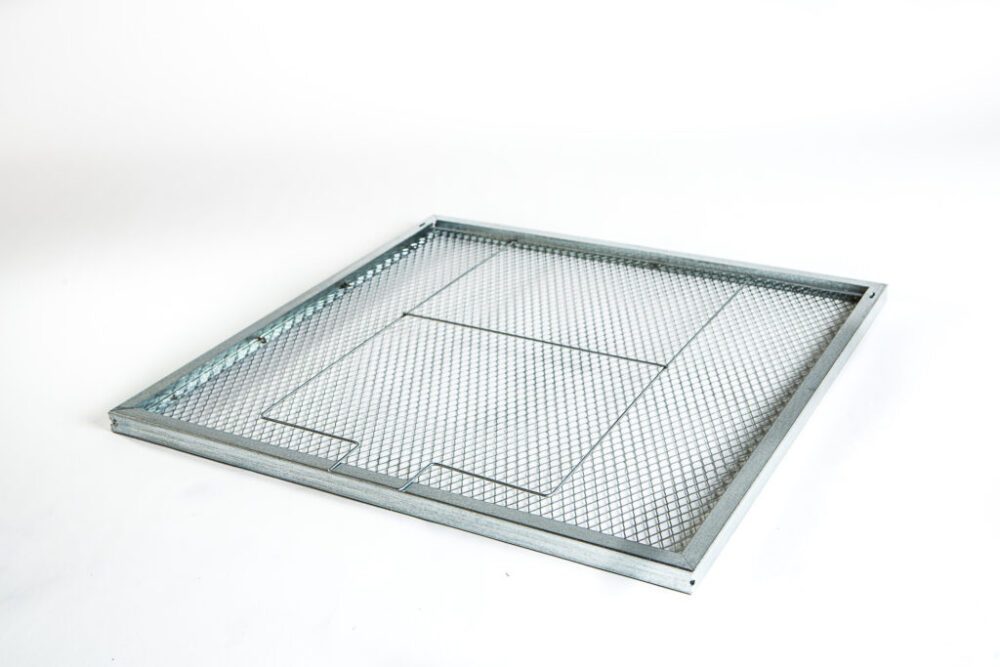
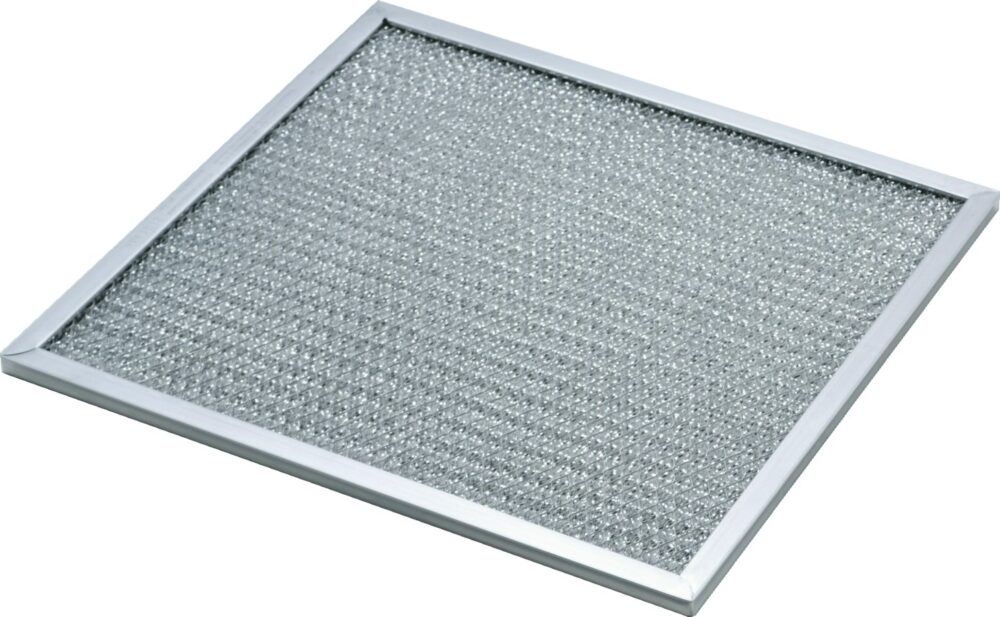
The HISS40 Custom 4″ Stainless Steel Washable Mesh Filter delivers maximum dust-holding capacity and the longest cleaning intervals available in permanent industrial air filtration. Engineered with 9-ply Type 304 stainless steel media construction, this filter captures and holds 204 grams of particulate per square foot—triple the capacity of 1″ filters and 50% more than 2″ filters. The result is quarterly to annual cleaning intervals that dramatically reduce maintenance labor costs and minimize production disruptions.
Built to handle continuous 900°F operating temperatures, the HISS40 excels in the most demanding industrial environments: foundries with molten metal operations, commercial bakeries with high-temperature ovens, chemical processing facilities with corrosive atmospheres, and industrial drying applications. The 4″ nominal depth (3-3/4″ actual) with heavy-duty 24-gauge stainless steel frame construction provides structural rigidity essential for high-volume airflow systems.
Every HISS40 filter is custom-manufactured to your exact length and width specifications down to 1/16″, ensuring perfect fit in 4″ depth filter tracks. This made-to-order precision eliminates bypass leakage common with standard-size filters forced into non-standard openings. The extended media depth distributes dust loading evenly across all 9 plies, preventing rapid surface clogging and maintaining consistent airflow throughout the extended service interval.
The HISS40 represents the ultimate solution when maximum capacity justifies the investment—heavy particulate loading, difficult filter access, continuous dust generation, or remote equipment requiring minimal service. While the initial cost exceeds thinner alternatives, the combination of extended cleaning intervals (reducing labor costs by 75-90%), 5-10 year service life, and superior performance in extreme environments delivers compelling total cost of ownership advantages for demanding industrial applications.
Benefits
Key Benefits of the HISS40 Custom 4″ Stainless Steel Washable Mesh Filter
- Maximum Dust-Holding Capacity: 204 g/sq ft capacity—triple 1″ filters, 50% more than 2″ filters—enables quarterly to annual cleaning intervals and dramatically reduces maintenance labor costs
- Extreme Temperature Performance: 900°F continuous rating handles foundry operations, commercial bakeries, industrial dryers, and high-temperature processes that destroy standard filters
- Superior Corrosion Resistance: Type 304 stainless steel construction withstands chemical processing, coastal environments, food processing wash-downs, and corrosive industrial atmospheres
- Extended Service Life: 5-10 year operational life in extreme environments—far exceeding disposable filters while reducing waste and replacement frequency
- 9-Ply Media Construction: Triple the filtration surface area of 1″ filters distributes dust loading evenly, prevents rapid surface clogging, maintains consistent airflow
- Precision Custom Sizing: Manufactured to exact 1/16″ specifications for perfect fit in 4″ depth tracks, eliminating bypass leakage and ensuring filtration efficiency
- Heavy-Duty Frame: 24-gauge stainless steel frame with reinforced corners provides structural rigidity for high-volume airflow without flexing or warping at high temperatures
- Total Cost Advantage: Maximum capacity plus extended intervals plus long service life delivers lowest cost per hour of operation despite higher initial investment
Technical Specifications
| Specifications: | Details: |
|---|---|
| Model Number | HISS40 (Custom 4″ Stainless Steel) |
| Filter Depth | 4″ nominal (3-3/4″ actual depth) |
| Height & Width | Custom dimensions manufactured to your exact specifications |
| Dimensional Tolerance | ±1/8″ on height and width |
| Frame Material | 24-gauge Type 304 stainless steel |
| Filter Media | 9-ply corrugated criss-cross stainless steel screen wire mesh |
| Face Grid Material | 30-gauge Type 304 stainless steel |
| Frame Construction | Precision-mitered corners, stainless steel pop rivets |
| Drainage | 3 corner drain holes for complete water removal after washing |
| Maximum Operating Temperature | 900°F continuous (UL 900 Class 1 certified) |
| Dust Holding Capacity | 204 grams per square foot (triple 1″ capacity, 50% more than 2″) |
| Cleaning Interval | Quarterly to annual (varies by application) |
| Recommended Airflow Range | 300-500 FPM face velocity |
| Initial Pressure Drop | 0.15-0.25″ w.g. @ rated airflow (clean filter) |
| Recommended Final Resistance | 0.80-1.0″ w.g. (water gauge) before cleaning |
| Weight | Approximately 6.5 lbs (varies by custom dimensions) |
| Washability | Repeated cleaning cycles with water-based methods, aggressive detergents, caustic agents, or pressure washers |
| Service Life | 5-10 years with proper maintenance protocols |
| Custom Size Range | Minimum 8″ x 8″, Maximum 30″ x 48″ |
| Size Precision | Manufactured to 1/16″ tolerance |
| Track Requirement | 4″ nominal depth filter tracks required (will NOT fit 1″ or 2″ tracks) |
| Compliance & Certifications | UL 900 Class 1, ASTM E 2931 (washable filter standard) |
| Manufacturer | American Metal Filter Company (AMFCO) |
| Country of Origin | Made in USA |
Industrial Applications
Metal Casting & Foundry Operations
Foundries generate extreme particulate from molten metal pours, sand handling, grinding operations, and furnace emissions. The HISS40’s 204 g/sq ft capacity handles heavy dust loading while the 900°F rating withstands radiant heat from furnaces and molten metal operations. Quarterly cleaning intervals minimize production disruptions in 24/7 operations. Type 304 stainless steel resists corrosion from foundry chemical binders and maintains structural integrity despite continuous high-temperature exposure. The 9-ply media captures fine metallic particulate while maintaining airflow for critical ventilation systems protecting workers from metal fumes and silica dust.
Commercial Bakery & Food Processing
Commercial bakeries with high-capacity ovens generate continuous flour dust and operate at temperatures that destroy standard filters. The HISS40 handles 900°F continuous temperatures near oven exhaust systems while capturing fine flour particulate across 9 media plies. Stainless steel construction meets food-grade requirements and withstands frequent washdowns with sanitizing chemicals. Extended quarterly cleaning intervals reduce contamination risk from maintenance activity in food production areas. The filter’s capacity prevents rapid clogging from flour dust clouds during mixing and handling operations, maintaining consistent ventilation critical for worker safety and product quality.
Chemical Processing & Manufacturing
Chemical plants expose filters to corrosive vapors, process dust, and elevated temperatures that rapidly destroy aluminum or galvanized alternatives. Type 304 stainless steel provides superior corrosion resistance against acids, alkalis, and organic solvents common in chemical processing. The 900°F rating handles reactor vessel ventilation, dryer exhaust, and process off-gas systems. Annual cleaning intervals are achievable in many applications, minimizing exposure of maintenance personnel to chemical atmospheres. The 9-ply construction prevents chemical-laden particulate from penetrating to inner layers, simplifying cleaning and maintaining filtration efficiency throughout extended intervals.
Industrial Drying & Curing Operations
Industrial dryers for textiles, lumber, coatings, and manufacturing processes operate continuously at elevated temperatures while generating substantial particulate. The HISS40’s 900°F rating handles dryer exhaust temperatures while the 204 g/sq ft capacity manages heavy dust loading from dried products. Quarterly maintenance intervals minimize downtime for continuous drying operations. The stainless steel construction withstands moisture-to-dry cycling that causes corrosion in galvanized frames. The extended media depth distributes lint, fiber, and product dust across 9 plies, preventing rapid surface loading that restricts airflow and reduces drying efficiency.
Powder Coating & Industrial Painting
Powder coating operations generate fine particulate overspray requiring high-efficiency filtration to protect workers and maintain coating quality. The HISS40’s 9-ply media captures submicron powder particulate while the 900°F rating handles curing oven exhaust ventilation. Stainless steel won’t contaminate powder coating or painting operations with rust particles that cause finish defects. The maximum capacity handles continuous production shifts with quarterly cleaning schedules, while the washable design allows complete powder removal for color changeovers. Type 304 stainless resists chemical solvents used in cleaning and paint prep operations, providing reliable performance in demanding finishing environments.
Material Selection Guide
Stainless Steel (HIS Series – 900°F) vs. Galvanized Steel (HIG Series – 325°F)
Choose stainless steel HISS40 when operating temperatures exceed 325°F, when corrosive atmospheres attack galvanized coatings, or when food-grade materials are required. The 575°F temperature advantage enables use near furnaces, ovens, dryers, and high-temperature industrial processes. Stainless steel maintains 5-10 year service life in chemical processing, coastal environments, and applications with frequent washdowns where galvanized coatings would fail. The higher initial investment is justified when extreme conditions would cause premature galvanized filter failure or when extended service life in harsh environments reduces total cost of ownership.
Stainless Steel (HIS Series – 900°F) vs. Aluminum (HIA Series – 275°F)
The HISS40 provides 625°F higher temperature capability than aluminum alternatives, essential for high-temperature industrial processes. Choose stainless when temperatures exceed 275°F, when superior corrosion resistance justifies the cost premium, or when structural rigidity at elevated temperatures is critical. While aluminum offers cost savings for standard applications, stainless steel delivers reliable performance in foundries, commercial bakeries, chemical plants, and industrial dryers where aluminum would soften, corrode, or fail. Both materials provide 5-10 year service life, but stainless achieves this longevity in far more demanding environments.
Custom Sizing Advantages
Custom-sized HISS40 filters eliminate bypass leakage by fitting precisely into non-standard filter openings common in industrial equipment. Standard size filters forced into oversized tracks allow unfiltered air to bypass the media, reducing filtration efficiency and exposing downstream equipment to damage. Made-to-order manufacturing ensures exact fit to 1/16″ tolerance, maximizing the 9-ply media’s filtration capability. For equipment with difficult filter access or remote installations, custom sizing enables optimal performance with extended intervals, minimizing maintenance trips to hard-to-reach locations.
Depth Comparison & Selection Guide
Understanding Filter Depth Impact on Performance
Filter depth directly determines dust-holding capacity and cleaning interval length. The HISS40 (4″ depth, 9-ply) holds 204 g/sq ft—triple the 68 g/sq ft of 1″ filters (5-ply) and 50% more than the 136 g/sq ft of 2″ filters (7-ply). This capacity advantage translates to proportionally longer intervals: where a 1″ filter requires bi-weekly cleaning, a 2″ filter extends to monthly cleaning, and the 4″ HISS40 achieves quarterly or annual intervals. The cost premium for greater depth is offset by reduced labor costs and extended service life in the most demanding applications.
When to Choose 1″ Depth (HISS10)
Select 1″ stainless filters when filter tracks are limited to 1″ nominal depth, when moderate particulate loading doesn’t justify the cost of deeper alternatives, or when monthly cleaning schedules are acceptable. The 1″ profile fits most standard HVAC equipment and provides excellent performance in many industrial applications. While requiring more frequent cleaning than deeper filters, the 1″ HISS10 offers the lowest initial cost entry point to washable stainless steel filtration with 900°F capability.
When to Choose 2″ Depth (HISS20)
The 2″ HISS20 offers the optimal balance of capacity and cost for many installations. With double the dust-holding capacity of 1″ filters, the 2″ depth extends cleaning intervals by 80-100% while adding only modest cost over the 1″ alternative. Choose 2″ depth when you have 2″ filter tracks available, when particulate loading causes 1″ filters to require cleaning more than monthly, or when labor costs for frequent maintenance are significant. The 2″ depth provides excellent value for moderate to heavy dust loading applications.
When to Choose 4″ Depth (HISS40)
The HISS40 represents the ultimate capacity solution justified by specific operational demands: (1) Heavy continuous particulate loading requiring maximum capacity to achieve quarterly or annual cleaning intervals, (2) Difficult filter access locations where minimizing maintenance trips justifies higher initial cost, (3) Remote or elevated equipment where extended intervals reduce safety risks and access costs, (4) Applications where the labor cost of frequent cleaning exceeds the HISS40’s cost premium, or (5) Critical systems where extended reliable operation between services is paramount. While the 4″ depth carries the highest initial cost, it delivers the lowest cost per hour of operation in heavy-duty applications by maximizing the interval between expensive maintenance activities.
Track Compatibility Requirements
Critical consideration: The 4″ nominal depth HISS40 (3-3/4″ actual) requires 4″ depth filter tracks. It will NOT fit in 1″ or 2″ tracks. Before ordering, verify your equipment has 4″ nominal depth track capacity. Measure the existing filter track opening from front face to rear face—it should be approximately 3-7/8″ to 4″ to accommodate the HISS40. If you’re uncertain about track depth, consult equipment documentation or contact technical support. Installing a 4″ filter in undersized tracks is impossible, while installing thinner filters in 4″ tracks reduces efficiency and may cause rattling or improper sealing.
Construction Features
9-Ply Stainless Steel Media Construction
The HISS40 features 9 layers of woven Type 304 stainless steel mesh, providing triple the filtration surface area of 1″ filters (5-ply) and 50% more than 2″ filters (7-ply). This expanded media pack distributes particulate loading evenly across all layers, preventing rapid surface clogging that restricts airflow. Each ply captures progressively finer particulate as air moves through the media depth, achieving high efficiency while maintaining low resistance. The additional plies enable the 204 g/sq ft capacity—the highest in the HIS Series—translating directly to extended cleaning intervals. The multiple-layer design also provides redundancy: even if outer plies become heavily loaded, inner layers continue effective filtration until scheduled cleaning.
Heavy-Duty 24-Gauge Frame
The HISS40 frame is constructed from 24-gauge Type 304 stainless steel sheet—heavier than the 26-gauge frames used in 1″ and 2″ filters. This increased gauge provides structural rigidity essential for the 9-ply media pack and high-volume airflow systems. The frame maintains dimensional stability even at 900°F operating temperatures, preventing warping that would compromise sealing. Reinforced corner construction with welded joints eliminates weak points where frames might separate under repeated thermal cycling. The heavy-duty design supports the filter’s greater weight (approximately 6.5 lbs) without flexing during handling or installation.
30-Gauge Face Grids
Both intake and exhaust faces feature 30-gauge stainless steel support grids that protect the 9-ply media from physical damage while maintaining open area for airflow. The grid pattern distributes load evenly across the media pack, preventing sagging or compression of the extended depth construction. The grids also provide electrical grounding paths important in static-prone environments. Face grids are permanently attached during manufacturing, ensuring the media remains properly positioned throughout the filter’s 5-10 year service life.
Type 304 Stainless Steel Material Properties
Type 304 stainless steel provides superior corrosion resistance through its chromium-nickel composition (18% chromium, 8% nickel). This austenitic stainless maintains strength and ductility across the full operating range from ambient to 900°F. Unlike galvanized steel which loses its protective zinc coating at high temperatures, Type 304’s corrosion resistance is intrinsic to the material itself. The non-magnetic properties of Type 304 are advantageous in applications sensitive to magnetic fields. Food-grade classification makes Type 304 suitable for bakery and food processing applications. The material’s excellent formability enables the complex geometry of the 9-ply media construction.
Continuous Weld Construction
All frame joints use continuous TIG (Tungsten Inert Gas) welding rather than spot welding, ensuring complete structural integrity and preventing leakage paths at corners. The continuous welds maintain strength at elevated temperatures where spot welds might fail. Welded construction eliminates mechanical fasteners that could corrode or loosen during thermal cycling. The welds are ground smooth to prevent sharp edges during handling. This construction method provides the structural integrity required for 5-10 year service life in demanding industrial environments with daily thermal cycling and high differential pressures.
Maintenance & Cleaning
Extended Cleaning Intervals
The HISS40’s 204 g/sq ft capacity enables quarterly cleaning intervals in most industrial applications, with some facilities achieving annual cleaning schedules in lighter-duty installations. This represents a dramatic reduction from monthly or bi-weekly cleaning required for 1″ filters, or monthly to quarterly intervals for 2″ filters. Extended intervals reduce labor costs by 75-90%, minimize production disruptions from maintenance activities, and decrease exposure of maintenance personnel to industrial atmospheres. Monitor differential pressure across the filter to optimize cleaning schedules for your specific application—clean when pressure drop reaches 0.8″ to 1.0″ w.g. or per equipment manufacturer specifications.
Cleaning Methods for 4″ Depth Filters
Proper cleaning of the HISS40’s 9-ply construction requires attention to the extended media depth. Soak the filter in warm water (120-140°F) with appropriate detergent for 30-60 minutes—substantially longer than the 20-40 minutes required for 2″ filters or 15-30 minutes for 1″ filters. The extended soak time ensures cleaning solution penetrates completely through all 9 media layers, dissolving oils and loosening embedded particulate. For heavily loaded filters, use a soft brush to work cleaning solution through the media from both faces. Rinse thoroughly with clean water from both sides until runoff is clear, ensuring removal of all detergent and loosened particulate from the extended depth.
Drying Requirements
After rinsing, allow the HISS40 to drain for 15-20 minutes in a vertical orientation before final drying. The 9-ply construction holds more water than thinner filters, requiring extended drain time. Air dry the filter completely before reinstallation—moisture trapped in the deep media pack can cause efficiency loss and may promote microbial growth in some environments. In industrial settings, compressed air can accelerate drying by blowing through the media from the clean side, but use moderate pressure (30-40 PSI) to avoid damaging the media structure. Complete drying typically requires 2-4 hours depending on ambient conditions.
Inspection After Cleaning
After each cleaning cycle, inspect the HISS40 for media damage, frame distortion, or degraded welds. Check that all 9 media plies remain intact without tears, punctures, or separation. Verify the frame maintains dimensional accuracy—measure length and width to ensure the filter still fits properly in the track. Inspect corner welds for cracks or separation. Check face grids for deformation. The filter should maintain its original dimensions and structural integrity throughout its 5-10 year service life. If inspection reveals damage, the increased depth and weight of 4″ filters may complicate repairs—consult the manufacturer regarding refurbishment options.
Handling Considerations
The HISS40’s approximate 6.5 lb weight and extended 4″ depth require careful handling during removal, cleaning, and reinstallation. Two-person handling may be advisable for larger sizes to prevent dropping or damaging the filter. The greater weight increases momentum during handling, making the filter more difficult to maneuver in tight equipment spaces. When removing heavily loaded filters, expect additional weight from accumulated particulate—a fully loaded HISS40 may weigh 8-9 lbs. Use appropriate personal protective equipment when handling filters loaded with industrial particulate, especially in chemical processing or foundry applications.
Installation
Verify 4″ Track Compatibility
Before ordering the HISS40, verify your equipment has 4″ nominal depth filter tracks. Measure the filter track opening from the front face to the rear face—it should be approximately 3-7/8″ to 4″ to accommodate the 3-3/4″ actual depth of the HISS40. The filter will NOT fit in 1″ (7/8″ actual) or 2″ (1-3/4″ actual) tracks. If you’re replacing existing filters, verify they are currently 4″ nominal depth. For new installations or track modifications, ensure the HVAC system design accounts for the 4″ depth requirement. Installing undersized filters in 4″ tracks reduces efficiency and creates bypass leakage.
Custom Size Ordering
Measure your filter opening precisely to 1/16″. The HISS40 is manufactured to your exact specifications for length and width. Measure the filter track opening (the space where the filter slides) rather than the existing filter—old filters may have shrunk or expanded. For replacement applications, measure the track opening in multiple locations and use the smallest dimension to ensure fit. Record dimensions as Length x Width. Common dimension formats: 15.25″ x 24.1875″ or 20.0625″ x 25.75″. Custom sizes are non-returnable, so verify measurements carefully before ordering.
Installation Procedure
Slide the HISS40 into the 4″ filter track with the media plies perpendicular to airflow direction. The filter can be installed in any orientation—horizontal, vertical, or angled—as the rigid stainless steel construction prevents sagging regardless of position. Ensure the filter seats completely into the track with frame edges flush against track stops. The custom sizing should provide a snug fit that eliminates bypass gaps. For applications with high differential pressure or significant vibration, verify the track includes retention hardware to prevent the filter from dislodging. Check that the filter doesn’t obstruct dampers, sensors, or other equipment within the air handling unit.
Initial Startup
After installation, start the HVAC system and verify proper airflow. Monitor initial differential pressure across the HISS40—expect low pressure drop (typically 0.15-0.25″ w.g. for a clean filter depending on face velocity). Check for air leaks around the filter perimeter indicating improper seating or incorrect dimensions. Listen for rattling or vibration suggesting inadequate retention. Verify the 9-ply media remains stable without excessive movement. During the first week of operation, recheck differential pressure daily to establish baseline performance. This baseline helps optimize future cleaning schedules based on the rate of pressure increase in your specific application.
Pressure Drop Monitoring
Install differential pressure gauges (manometers) across the filter to monitor loading condition. The HISS40’s extended capacity means pressure drop increases slowly over the quarterly to annual service interval. Clean the filter when differential pressure reaches 0.8-1.0″ w.g. (or per equipment manufacturer specifications) to maintain energy efficiency and system performance. The 9-ply construction provides relatively gradual pressure increase as dust loading progresses—avoid letting pressure exceed 1.5″ w.g. as this indicates heavy loading that may be difficult to clean completely. Regular monitoring optimizes the balance between extended intervals and cleaning effectiveness.
Performance Optimization
Maximizing Cleaning Intervals
The HISS40’s 204 g/sq ft capacity delivers quarterly to annual intervals when properly matched to application particulate loading. To maximize intervals: (1) Install pre-filters upstream to capture larger particulate before it reaches the HISS40, (2) Optimize HVAC system airflow to operate at design face velocity (typically 300-500 FPM) rather than excessive velocity that overloads filters, (3) Address particulate sources where possible to reduce overall loading, (4) Clean filters before differential pressure becomes excessive—heavily loaded media is harder to clean completely, reducing capacity after cleaning. Facilities that implement these practices consistently achieve the longest intervals and maximum filter life.
System Integration
The HISS40 performs optimally as the final filter stage in multi-stage filtration systems. Use disposable pre-filters (MERV 8-11) or washable aluminum/galvanized filters upstream to capture larger particulate (>10 microns), protecting the HISS40 from rapid loading with coarse dust. This filtration strategy extends HISS40 cleaning intervals while the stainless construction handles the high-temperature or corrosive atmosphere that would destroy pre-filters. The 9-ply stainless media then captures finer particulate (down to 5-10 microns) requiring the extended capacity. This staged approach maximizes the total system capacity while optimizing the cost-performance balance.
Temperature Management
While the HISS40 handles 900°F continuous operation, lower temperatures reduce thermal stress and may extend the 5-10 year service life toward the upper end of the range. Where possible, install filters in locations with lower ambient temperatures or allow exhaust gases to cool before filtration. However, don’t compromise ventilation effectiveness to reduce filter temperature—the HISS40 is specifically designed for high-temperature applications where temperature reduction isn’t feasible. The Type 304 stainless steel maintains full strength and corrosion resistance throughout the rated temperature range.
Face Velocity Considerations
Optimal performance occurs at face velocities of 300-500 FPM. Higher velocities (>600 FPM) increase pressure drop and may reduce dust-holding capacity as particulate impacts the surface with greater force, causing deeper penetration into the 9-ply media. Lower velocities (<200 FPM) are acceptable and may slightly extend capacity, but ensure they meet ventilation requirements. The HISS40’s extended depth provides more tolerance for velocity variation than thinner filters. Consult HVAC system design documentation for target face velocity, or calculate it from measured CFM and filter face area (FPM = CFM ÷ face area in square feet).
Cost-Benefit Analysis
Total Cost of Ownership
The HISS40’s higher initial cost is offset by dramatic operational savings over its 5-10 year service life. Consider: (1) Labor cost reduction—quarterly or annual cleaning versus monthly or bi-weekly for thinner filters reduces labor by 75-90%, (2) Production uptime—extended intervals mean fewer maintenance shutdowns and disruptions, (3) Energy savings—the 9-ply construction maintains lower pressure drop when clean compared to equivalently loaded thinner filters, (4) Disposal elimination—washable design eliminates ongoing disposable filter costs and waste disposal fees, (5) Extended service life—5-10 years in extreme environments provides reliable performance long after alternatives would require replacement.
When the HISS40 Investment is Justified
The 4″ depth premium is justified when: Heavy continuous particulate loading causes thinner filters to require cleaning more than monthly; Filter access is difficult, elevated, or requires production shutdown making each maintenance visit expensive; Remote equipment locations make frequent maintenance trips impractical; Labor costs are high relative to filter cost; Applications involve temperatures exceeding 325°F (precluding galvanized) or corrosive atmospheres (precluding aluminum); Critical systems requiring maximum reliability benefit from the redundancy of 9-ply construction; or when calculating total cost per operating hour rather than initial purchase price.
Comparison to Disposable Alternatives
Disposable filters for high-temperature or industrial applications may cost $30-80 each depending on size and specification. At monthly replacement intervals, annual disposable costs reach $360-960 plus labor and waste disposal. The HISS40’s initial cost is recovered within 18-36 months through elimination of recurring purchases, after which operational savings accumulate for the remaining 3-8 years of service life. In extreme environments (>500°F, corrosive atmospheres), disposable alternatives may fail in days or weeks, making washable stainless steel the only economically viable solution.
Safety & Compliance
High-Temperature Safety
The HISS40’s 900°F continuous rating enables safe operation in high-temperature exhaust systems, but proper system design is essential. Ensure ductwork and mounting hardware are also rated for the operating temperature. Verify the filter location allows adequate access for maintenance without exposing personnel to extreme temperatures—provide cool-down periods or isolation before filter service. Use appropriate personal protective equipment when handling filters that may be hot from recent operation. The stainless steel construction won’t contribute to fire hazards unlike filters with organic components.
Food Processing Compliance
Type 304 stainless steel meets FDA requirements for food contact surfaces, making the HISS40 appropriate for commercial bakery and food processing applications. The washable design supports sanitation protocols requiring regular cleaning with food-safe detergents. Stainless steel won’t shed rust particles that could contaminate products. For food processing applications, establish cleaning frequencies that meet facility sanitation schedules, which may be more frequent than the intervals dictated purely by dust loading.
Worker Protection
Proper filtration protects workers from airborne particulate hazards including metal fumes, flour dust, chemical particulate, and respirable dust. The HISS40’s extended capacity maintains effective filtration throughout the interval between cleanings, ensuring consistent worker protection. Monitor differential pressure to ensure cleaning occurs before excessive loading compromises filtration efficiency. When handling filters loaded with hazardous particulate, use appropriate respiratory protection, gloves, and eye protection during removal and cleaning operations.
Complementary Products
For multi-stage filtration systems, consider pairing the HISS40 with other custom stainless steel filters for optimal performance throughout your extreme environment HVAC system.
Frequently Asked Questions
Why choose a 4″ stainless steel filter over 1″ or 2″ depths?
The 4″ HISS40 delivers maximum dust-holding capacity at 204 g/sq ft—triple the capacity of 1″ filters and 50% more than 2″ filters. This translates to quarterly or even annual cleaning intervals versus bi-weekly or monthly for thinner filters. Choose 4″ depth when you have heavy particulate loading, difficult filter access requiring minimal maintenance trips, continuous dust generation, or remote equipment. The higher initial cost is justified by dramatically reduced labor costs and extended service life in demanding applications.
What maintenance procedures are different for 4″ depth filters?
Cleaning 4″ filters requires longer soak times (30-60 minutes versus 20-40 for 2″ or 15-30 for 1″) to ensure complete media penetration. Use warm water (120-140°F) with appropriate detergent, and ensure the cleaning solution reaches all 9 media layers. After rinsing, allow extended drain time (15-20 minutes) and verify complete drying before reinstallation. The heavier weight (approximately 6.5 lbs) may require two-person handling.
Why Choose the HISS40 Custom 4″ Stainless Steel Washable Mesh Filter?
The HISS40 represents the ultimate solution when maximum capacity justifies the investment—heavy particulate loading, difficult filter access, continuous dust generation, or remote equipment requiring minimal service. With 900°F continuous temperature rating, unmatched corrosion resistance, and quarterly to annual cleaning intervals, this custom stainless steel filter delivers compelling total cost of ownership advantages for the most demanding industrial applications. Made to your exact specifications with premium Type 304 stainless steel construction, the HISS40 ensures you never struggle to find compatible replacement filters while achieving maximum performance in extreme environments.
Ordering Information
Custom Size Specifications
Provide exact filter dimensions to 1/16″ precision. Measure the filter track opening (not an existing filter) at multiple points and use the smallest dimension. Specify dimensions as Length x Width in inches. Use decimal equivalents for fractional measurements: 1/16 = .0625, 1/8 = .125, 3/16 = .1875, 1/4 = .25, 5/16 = .3125, 3/8 = .375, 7/16 = .4375, 1/2 = .5, 9/16 = .5625, 5/8 = .625, 11/16 = .6875, 3/4 = .75, 13/16 = .8125, 7/8 = .875, 15/16 = .9375. Example: 20.25″ x 25.1875″. Size range: minimum 8″ x 8″, maximum 30″ x 48″.
Lead Time
The HISS40 is custom-manufactured to order. Typical lead time is 2-4 weeks depending on size and quantity. Rush production may be available for emergency replacements—contact customer service for expedited options. Plan ahead for initial orders or seasonal maintenance to ensure filters arrive when needed. For facilities with multiple filter locations, consider ordering all sizes simultaneously to optimize production scheduling.
Minimum Order
Custom HISS40 filters can be ordered individually with no minimum quantity requirement. However, ordering multiple filters for a facility simultaneously may provide cost advantages through production efficiency. For large facilities with numerous filter locations, contact sales for volume pricing on complete facility requirements.
Returns Policy
Custom-sized filters manufactured to specific dimensions are non-returnable. Verify all measurements carefully before ordering. If you receive a filter that doesn’t match your specified dimensions, contact customer service immediately—manufacturing errors are covered by warranty. Keep original order documentation showing specified dimensions for reference.
Technical Support
For assistance with filter selection, sizing, or application-specific questions, contact AMFCO technical support. Provide information about operating temperature, particulate type, airflow rate, available track depth, and current filter performance to receive recommendations optimized for your application. Technical support can help determine whether the HISS40’s maximum capacity justifies the investment for your specific conditions or whether the HISS10 or HISS20 provides better value.